

Endometriosis affects as many as 1 in 10 women in the United States, causing uncomfortable symptoms and sometimes infertility. Unfortunately, many women suffer from the condition in silence and aren’t taken seriously by their primary care providers or gynecologists. If you are diagnosed with endometriosis or suspect that you have this condition, you must understand…
Endometriosis affects as many as 1 in 10 women in the United States, causing uncomfortable symptoms and sometimes infertility. Unfortunately, many women suffer from the condition in silence and aren’t taken seriously by their primary care providers or gynecologists.
If you are diagnosed with endometriosis or suspect that you have this condition, you must understand your treatment options. Endometriosis is very treatable with the proper care and a team of dedicated doctors on your side.
Armed with the correct information and knowledge, you can advocate for your needs, improve your quality of life, and achieve your goals. Read on to learn about endometriosis, its symptoms, how it impacts fertility, and the treatment options available.
Endometriosis is a reproductive disorder that causes tissue that normally grows within the uterus known as the endometrium to be found outside the uterus. Typically, the tissue grows along the outside of the uterus, in or on the ovaries, in the fallopian tubes, and elsewhere in the pelvis.
Acting just like your endometrium, it goes through changes as you move through your menstrual cycle. So, when you get your period, it breaks down and bleeds. However, the tissue is unable to leave the body and causes scarring, adhesions, or other complications.
Endometriosis may be diagnosed based on symptoms, but surgery is the only true way to diagnose it. Surgery can be done with laparoscopy, meaning the procedure is minimally invasive. During the surgery, doctors can determine the stage of the endometriosis and often provide some treatment that relieves symptoms.
The stages of endometriosis are based on the amount of endometrial tissue. Here is a short explanation of each stage:
Unfortunately, many women aren’t able to get a diagnosis of endometriosis until an average of 7.5 years have passed. This means they’ve lost valuable treatment time, especially when it comes to fertility concerns.
For many women, getting appropriate treatment for endometriosis is dependent upon advocating for themselves, as the symptoms and condition are often underlooked or dismissed.
It’s natural to wonder why endometriosis happens and if there is any way to prevent it. Researchers are still trying to understand how and why endometriosis appears in the body. So far, there are only theories and possible relationships that may explain this reproductive disorder.
Endometriosis may be genetic, as it does tend to run in families. If you have a close family member such as a mother, aunt, or sister with endometriosis, you are more likely to have it as well. Endometriosis can appear at any point after a girl begins menstruating but more commonly appears in women in their 30s and 40s.

One likely cause of endometriosis is a condition called retrograde menstruation. During retrograde menstrual flow, the endometrial tissue doesn’t flow directly down to the cervix and out of the vagina. Instead, some of it enters the fallopian tubes, or leaves the uterus, and gets into other areas of the pelvis. There, the endometrial tissue continues to grow and follow the menstrual cycle.
Hormones may also play a role in endometriosis. Researchers have noticed that estrogen promotes endometriosis. This is why during pregnancy, when progesterone is prevalent, endometriosis temporarily pauses. Also, endometriosis symptoms may lessen or disappear after menopause when the body stops making estrogen.
Yet another factor may be the immune system. Women with endometriosis are more likely to experience immune disorders. Researchers suspect that the immune system may fail to remove the endometrial tissue from the areas where it shouldn’t be.
Endometriosis can cause a range of different symptoms. However, endometriosis can also be asymptomatic, meaning that you may not know that you have it. Some women only discover that they have endometriosis when they struggle to get pregnant or have unrelated abdominal surgery.
It’s also important to note that the severity of endometriosis isn’t always linked to how severe your symptoms are. Sometimes, symptoms such as pain can be worse when the endometrial tissue grows close to a nerve or when bleeding causes irritation.
Some of the most common symptoms of endometriosis are:
Because symptoms of endometriosis mimic other conditions such as PCOS and even digestive conditions like IBS, it can be extremely difficult to diagnose. It is also complicated by the fact that endometriosis is not always detectable on ultrasounds or other imaging tests. Some doctors go as far as to dismiss symptoms as related to anxiety, stress, or just a painful menstrual period.
As many as 50% of women who experience infertility have endometriosis. There are several ways that endometriosis can affect fertility. Mainly, endometriosis causes problems in the reproductive organs, resulting in infertility. Endometrial tissue can grow in the ovaries or the fallopian tubes.
There, the tissue can block the egg and prevent ovulation or fertilization. In other words, the tissue can prevent the egg from leaving the ovary or keep the sperm from reaching the egg. Another theory is that the normal endometrium may not allow the egg to implant, or scar tissue may prevent this.
A further complication is that endometriosis is often very painful. This can make intercourse so uncomfortable that it is impossible to conceive.
Despite these hardships, it is possible for many women with endometriosis to get pregnant. With appropriate treatment, including laparoscopy, medication, and, if necessary, fertility treatments. If you want to learn more about endometriosis treatment options including laparoscopy, get in touch with our team of experts.
Unfortunately, there is no definitive cure for endometriosis. Yet, there are viable treatment options that help alleviate symptoms and can help you grow your family in case of infertility. Some treatment options only manage symptoms, while other treatments focus on eliminating the endometriosis altogether.
The only way to definitively diagnose and treat endometriosis is through surgery. Fortunately, advancing technology allows minimally invasive surgery via laparoscopy. With laparoscopy, small incisions, typically smaller than one centimeter in length are made, and laparoscopes are inserted. A fiber optic scope and instruments are inserted through the openings, allowing surgeons to remove the endometrial tissue.
Laparoscopy can be very effective in helping resolve fertility issues related to endometriosis. Through laparoscopy, your doctor can remove scar tissue and adhesions that block fallopian tubes or ovarian cysts caused by endometriosis.
During the procedure, the tissue is often sent to the lab to confirm that it is endometrial tissue. Finally, the doctor works to resolve any structural fertility issues caused by the endometrial tissue. If you have severe symptoms, any other tissue will also be removed.
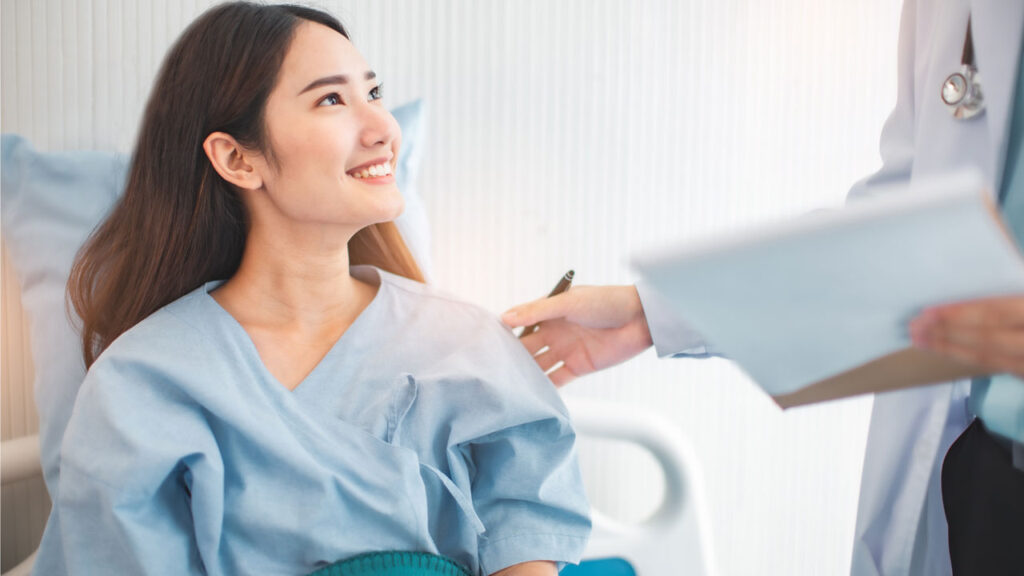
Fortunately, because laparoscopy is not as invasive as traditional surgery methods, the recovery time is shorter. You will be able to return to normal life within about 2 to 4 weeks after surgery. Plus, the outlook is also very good for your fertility. As many as 75% of women who undergo laparoscopy for endometriosis are able to get pregnant after they’ve healed.
In many cases, removing endometriosis can eliminate the disorder, and the symptoms, altogether. However, in 20 to 30% of women, endometriosis returns within five years of the surgery.
One common surgical treatment for endometriosis is a hysterectomy. In this procedure, the entire uterus, and possibly the ovaries, are removed surgically. As a result, women who have a hysterectomy are infertile. The treatment is very invasive and may mean you’ll have to take hormone medications for the rest of your life.
For this reason, the treatment should be used only as a last resort. Should it be necessary, the treatment can be very effective at eliminating symptoms related to endometriosis.
The symptoms of endometriosis can be debilitating for some women. In these cases, treating symptoms can improve your quality of life until surgery can be programmed. Unfortunately, treating symptoms doesn’t get rid of endometriosis or resolve related fertility issues.
Some of the commonly used endometriosis medication treatments include:
Give us a call and talk to our team.
If you’re under 35 and have been trying for 12 months (or 6 months if 35+), consider an evaluation.
Seek urgent care for sudden severe pain or heavy bleeding.




We’re Ready To Help.
Connect with our team to discuss your situation and understand your next steps—without pressure, without judgment.
Connect with our team to discuss your situation and understand your next steps. Our fertility clinic in Lower Manhattan is here to help - without pressure, without judgment.
Comprehensive fertility care with clarity and confidence.